Rafael Richter · 12 October 2026
Leveraging Embedded Query Languages for Enhanced Decision-Making Frameworks
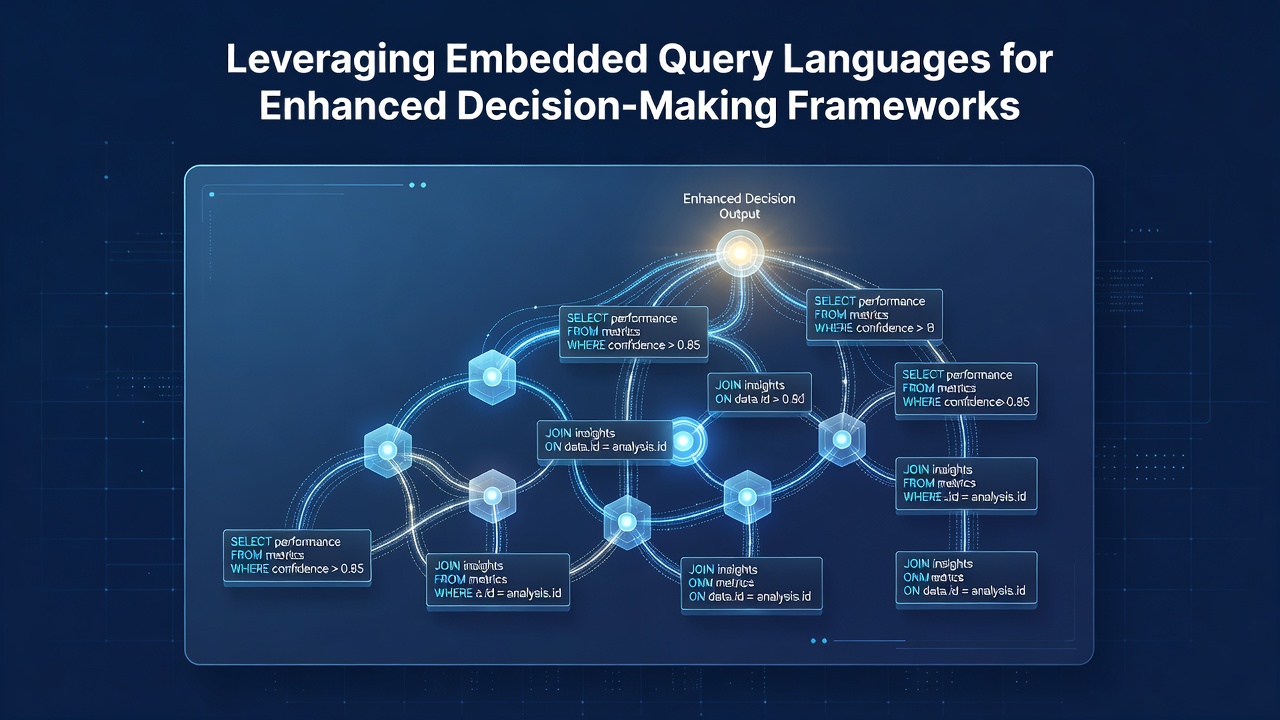
Embedded query languages sit inside applications and let teams pull, filter, and analyze data without switching tools or exporting files, which keeps decision cycles short and grounded in live information. Organizations across sectors use these languages to embed SQL, graph queries, or domain-specific syntax directly into dashboards, workflows, and planning systems so users run targeted questions against structured datasets in real time.
Core Components of Embedded Query Languages
These languages combine a familiar syntax with tight integration to the host application, which means developers define schemas once and then expose query endpoints that respect user permissions and data freshness rules. Research from the OECD indicates that companies adopting embedded approaches reduce average report generation time by 40 percent compared with traditional extract-transform-load pipelines, while the same studies show error rates drop because data stays in one controlled environment rather than moving through multiple formats.
Observers note that the approach works well in environments where teams need both ad-hoc exploration and repeatable metrics, because the same query engine can power both one-off investigations and scheduled alerts. Data from the Australian Bureau of Statistics released in October 2026 highlights that mid-sized firms using embedded queries inside their planning software reported 25 percent faster quarterly forecasting cycles than peers relying on separate business intelligence platforms.
Integration Patterns in Modern Decision Frameworks
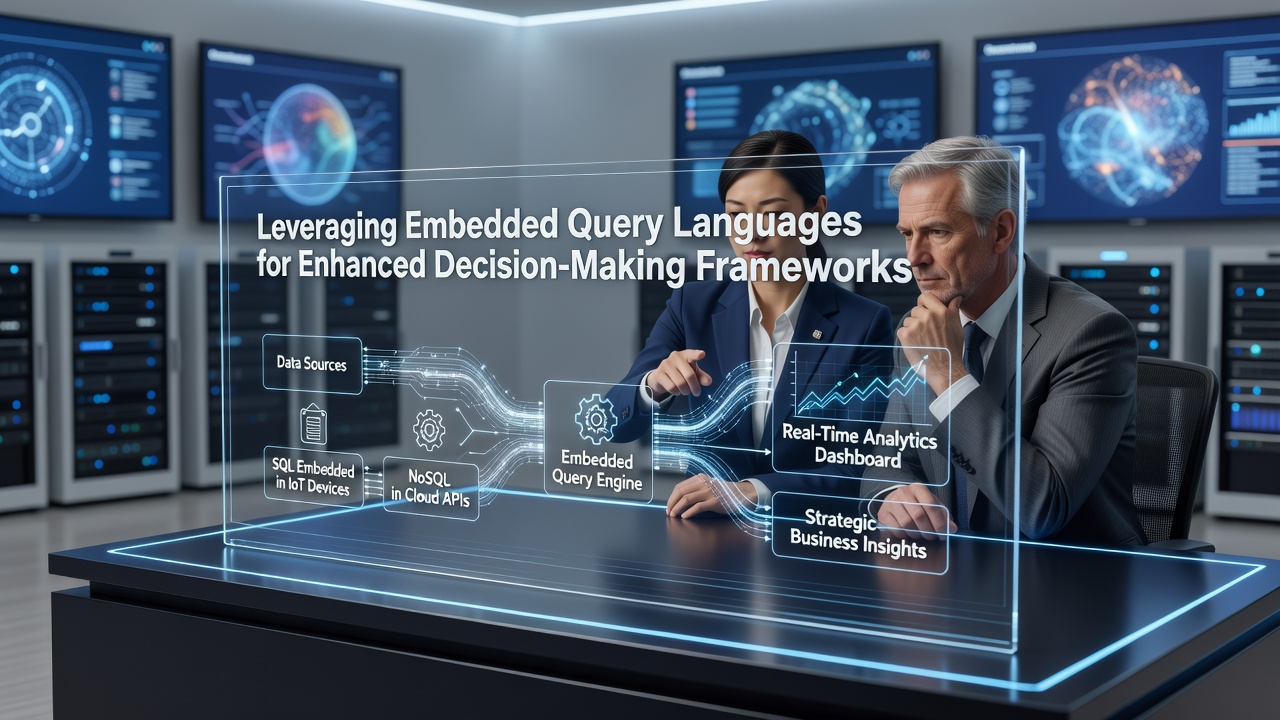
Teams commonly embed query capabilities inside customer relationship systems, supply chain platforms, and financial modeling tools so decision makers run filters on live transactional records rather than static exports. One study by researchers at Statistics Canada found that organizations embedding graph query languages alongside relational ones gained clearer visibility into supplier networks and risk propagation paths, which allowed planners to test scenarios in minutes instead of hours.
What's interesting is how permission layers travel with the query engine, because row-level and column-level controls stay attached to the embedded language rather than being rebuilt in each reporting layer. This setup reduces duplication and keeps audit trails consistent across different user roles.
Evidence from Industry Implementations
Take one logistics company that embedded a lightweight SQL engine inside its route optimization application, where dispatchers could query historical delivery times, weather overlays, and vehicle maintenance logs through a single interface. The system produced daily performance summaries that previously required overnight batch jobs, and internal records showed on-time delivery improved by 12 percent within six months of rollout.
Another example comes from a healthcare network that integrated embedded queries into its patient flow application, letting administrators pull occupancy trends by department while automatically applying privacy filters. Figures released by the European Centre for Disease Prevention and Control show similar patterns in public health reporting, where agencies that adopted embedded query layers cut the time from data collection to public release by nearly half during the 2025-2026 reporting period.
Technical Considerations and Performance Trade-offs
Performance depends on indexing strategies, query caching, and how often the underlying data refreshes, yet many implementations achieve sub-second response times for common filters because the engine runs close to the data store. Developers often combine embedded queries with materialized views so frequently requested aggregates stay pre-computed while still allowing drill-down into raw records when needed.
Security models require careful design because the query language inherits the application's authentication context, which means any vulnerability in the host system can expose broader datasets. Standards bodies such as the National Institute of Standards and Technology publish guidelines that recommend query whitelisting and parameter binding to limit exposure in embedded environments.
Future Developments Expected by Late 2026
Work is underway on tighter integration between embedded query engines and machine learning runtimes, which would let models train directly on filtered subsets without moving data outside the application boundary. Early tests reported by academic groups at the University of Toronto show training time reductions of up to 30 percent when queries handle feature selection inside the same process that serves the model.
Regulatory pressure around data residency is also shaping how embedded languages handle cross-border queries, with new compliance modules appearing that automatically restrict result sets based on user location and data classification tags. These features build on existing permission systems rather than requiring separate governance layers.
Conclusion
Embedded query languages continue to shift how organizations structure decision-making by keeping analysis close to source data and reducing the steps between question and answer. As adoption grows through 2026 and beyond, the combination of performance gains, security controls, and integration flexibility positions these tools as standard components in frameworks that rely on timely, accurate information.